“We need to start.
But where?”
You want one sensible move, with a clear reason to invest time and money.
AI CONSULTANCY · BUCKINGHAMSHIRE
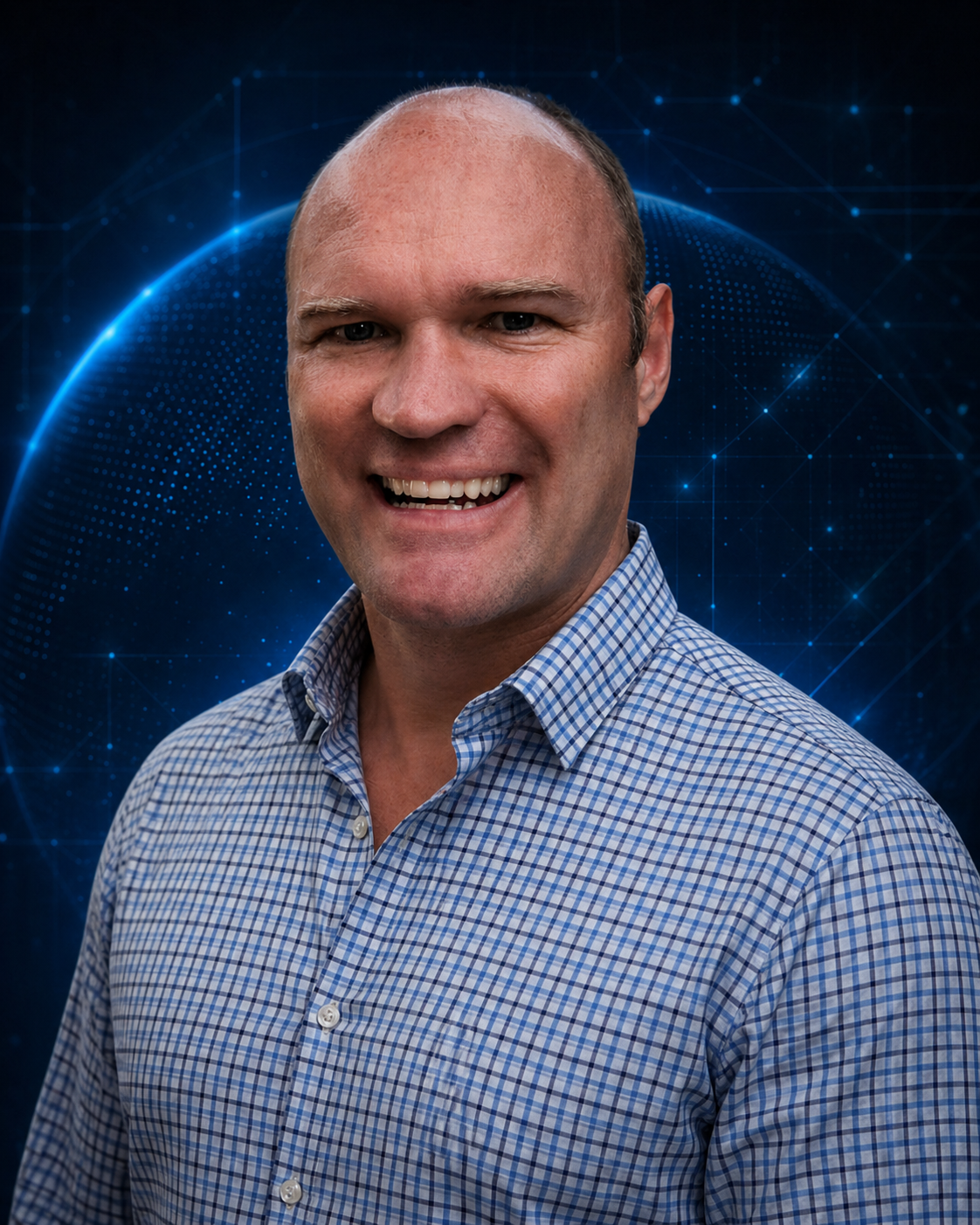
You know AI matters. The next step needs to improve the business and work for your people. I’m Don Graham, a Buckinghamshire-based AI consultant and CTO helping SMEs and SaaS teams turn experiments into operational and commercial progress.
Choose the right work. Prove the value. Bring your people with you.
Fintech / Wealth technology / EdTech / SaaS
FROM “WE SHOULD” TO “HERE’S HOW”
Pick the situation that feels familiar. Get a practical starting brief you can keep, share with your team or discuss with me.
You want one sensible move, with a clear reason to invest time and money.
You need evidence that useful work is improving before you scale it.
You need people to feel involved, capable and supported in a new way of working.
YOUR SUGGESTED STARTING POINT
The email link opens a draft in your email app. You choose whether to send it.
01 / WORK WITH ME
For SME owners, SaaS founders
and their leadership teams.
Whether you’re running an SME or growing a SaaS business, we’ll find practical ways to free up your team, improve customer workflows and strengthen delivery.
FIND YOUR DIRECTION
Find where AI can help your business, from time-consuming administration to customer support and software delivery. Choose a starting point that fits your resources.
A prioritised roadmap and a clear brief for your first pilot.
MAKE IT WORK
Pilot an internal tool, support workflow or delivery improvement, then help your team make it part of their day.
A tested pilot, an enabled team and evidence for what comes next.
BUILD WITH CONFIDENCE
Put clear rules and ownership around AI use, with oversight that fits the size of your team and the needs of your customers.
A practical governance plan with clear owners and review points.
Each engagement is scoped around your objectives, team capacity and budget, with a clear starting point and practical deliverables.
RESULTS NEED PEOPLE
If people don’t trust the change, have time to learn or see how it helps their work, another licence or training session won’t fix the problem on its own.
“Will this actually help me—or just change what’s expected of me?”
A question worth answering before a rollout.
Explore team enablementUnderstand the work, the frustrations and the concerns. Involve the people affected in deciding what a useful change looks like.
Agree manager support and protected practice time. Use real tasks, clear boundaries and someone colleagues can turn to.
Test with a small group. Make it easy to challenge outputs, report problems and suggest improvements.
Track useful adoption alongside quality and business outcomes. Agree who supports the workflow when the pilot ends.
If responsibilities may change, leaders need to explain that openly. Technology and training cannot substitute for trust or management decisions.
WHY THIS IS DIFFERENT
I lead AI adoption inside a regulated, customer-facing SaaS business. That means protecting customers, supporting teams, shipping products and defending the investment at the same time.
IN PRACTICE AT CRB CUNNINGHAMS
As CTO, I lead AI adoption, product innovation, data and security across a 40-person R&D function. The work spans engineering, support, product, sales, finance and operations.
We focus on redesigning real workflows, removing avoidable work and turning insight into better products and decisions—not simply using more AI.
estimated hours saved per month across key functions, reported by CRB
hours of released engineering capacity indicated by coding-assistant data in one measured period
HOW I MEASURE VALUE
CRB figures are employed-role evidence, not consultancy client outcomes. Estimated time or capacity is not presented as realised cash saving or ROI.
A PRACTICAL FIRST 90 DAYS
A 90-day adoption plan turns pressure into a manageable sequence. The exact scope depends on the workflow, team capacity and risks involved.
Choose the business outcome, map the workflow and involve the people affected. Review existing tools, data, risks and the baseline.
Run a bounded pilot with clear ownership, practical training, human checks and feedback from the people doing the work.
Review value, quality, adoption and total cost. Agree whether to refine, extend, hand over or stop—and what governance is needed next.
02 / EXPERIENCE THAT INFORMS THE ADVICE
My consultancy approach draws on leading technology teams, modernising platforms and enabling practical AI adoption.
CRB CUNNINGHAMS / PLATFORM MODERNISATION
Led modernisation of the core platform to create a clearer upgrade path and a foundation for future AI capabilities.
lower hosting costs
lower support overhead
Approximate year-on-year reductions reported in my role.
CRB CUNNINGHAMS / AI ENABLEMENT
Coached colleagues without coding backgrounds to deliver internal tools, including engineering administration and reporting, and school network diagnostics.
CURRENCY HOLDINGS / TEAM BUILDING
Built the development team and helped grow the wider IT organisation to approximately 45 people, with around 95% departmental retention.
Selected outcomes from employed leadership roles. Individual consultancy outcomes depend on scope and business context.
IN THEIR WORDS
What people I’ve worked with say about my approach to leadership, ideas and delivery.
His creativity entwined with a practical approach to delivery and reliability is a rare combination. As time has gone on his diverse experience has added to these qualities to offer a level of expertise I would highly recommend to others.
Don is extremely personable and very creative. I feel completely at ease with his way of working. His brainstorming techniques are very beneficial and would recommend his services to anyone.
Excerpts from testimonials previously published on my website, reflecting earlier professional work.
03 / THE PERSON BEHIND THE WORK
People first.
Commercially grounded.
Curious by nature.
I’m Don. I bring technology strategy, hands-on delivery and a belief that lasting progress comes from helping people do their best work.
As Chief Technology & AI Officer at CRB Cunninghams, I lead AI adoption, product innovation, data and security across a 40-person R&D function. My remit spans strategy, product roadmaps, budgets, delivery and board-level reporting.
I’ve built teams in fintech, modernised wealth technology and helped take SaaS and education products from idea to market. That experience shapes how I approach consultancy: understand the business, bring people with you and deliver something useful.
Outside technology, I’ve coached grassroots girls’ football and served as Vice Chair of Compassion Direct UK. Living in Spain and Colombia for five years each has shaped how I work across cultures and teams.
Connect on LinkedIn04 / TECHNOLOGY LEADERSHIP
For CTO and technology leadership conversations, here’s the path that brought me here.
Nov 2023 — Present
Technology, data and AI strategy; a 45-person function; platform modernisation, governance and business-wide AI enablement.
Mar 2021 — Nov 2023
Technology strategy, onshore and offshore teams, AWS migration, product delivery and ISO 27001 certification.
2018 — 2021
Team building, online trading platforms, onboarding automation, data and business intelligence.
Earlier leadership
Bootstrapped a brokerage administration platform and led an education platform MVP rollout to more than 500 students.
AI CONSULTANCY / YOUR QUESTIONS
The questions behind the decision: money, time, trust, people and what happens next.
Yes. I’m based in Buckinghamshire and offer AI strategy, practical implementation, team enablement and governance support for SMEs and SaaS businesses. Contact me with your location and objectives so we can discuss a suitable way of working.
Potential opportunities include reducing repetitive administration, improving internal reporting and helping teams find and use business information. The right starting point depends on your workflows, data and capacity. I help you assess the opportunity before committing to implementation.
I help SaaS leaders assess internal productivity opportunities and potential product use cases, review data and delivery readiness, and define focused pilots. My CTO experience brings product roadmaps, engineering leadership and operational considerations into the decision.
Yes. We can start with your business objectives and a review of existing workflows and systems. The first step is to identify a manageable opportunity and any skills, data or ownership gaps, then agree the support needed.
Fees and timings are scoped around the objectives, complexity and support required. Share your priorities and budget context, and we can discuss a defined starting point and deliverables before you commit.
We agree success measures before the pilot, including a baseline for the current process. Depending on the use case, we can review time spent, quality, rework and adoption alongside implementation and running costs. The results guide whether to refine, scale or stop.
Start by understanding the concern. It may be job security, unreliable output, workload or an earlier change that went badly. I work with leaders and the people affected to choose a useful workflow, make expectations clear and build practice into the day. Training is part of the work; listening and manager support matter just as much.
The starting point is the work and the business outcome, not an assumed headcount reduction. AI can change tasks and responsibilities, and leaders need to be honest about their intentions. We can measure reduced rework, better service, useful capacity and quality without pretending that every hour saved becomes cash or that roles can never change.
Yes. We can look at whether the tools fit real workflows, whether people have access and time to practise, and whether managers are supporting the change. A focused team pilot can help distinguish a capability gap from an unsuitable tool or an unclear purpose.
That depends on the workflow and scope. Before starting, we agree a sponsor, a person who understands the work, access to appropriate examples and time for testing and feedback. A pilot needs real participation; I will not describe it as effortless or agree a rollout without discussing capacity.
Not necessarily. We review what you already have and compare configuration, process improvement and a custom build where appropriate. The decision should consider integration, quality, running costs, support and ownership. Sometimes a simpler automation or process change is the better choice.
We agree what information can be used, which tools and permissions are appropriate, and where human checks are needed before implementation. Testing should include exceptions and failure cases. The specific safeguards depend on the use case; no tool or pilot makes risk disappear.
Handover is part of the scope discussion: documentation, access, ownership, training and maintenance responsibilities should be agreed before building. The aim is to give your team a workable capability. Any ongoing support or specialist dependency should be explicit.
We review the evidence against the original success criteria and the costs of continuing. The decision may be to refine the approach, choose a different opportunity or stop. A well-bounded pilot can support a decision not to invest further.
We discuss the workflow or business goal, what you have already tried, who is affected and what would count as progress. We then decide whether there is a useful next step. Scope, fees and the people needed are agreed before any paid engagement; there is no need to send confidential business data with your first message.
LET’S MAKE SOMETHING USEFUL HAPPEN
Bring one business challenge. We’ll talk through what you’ve tried, who is affected and what progress would look like—then decide whether there’s a useful next step.
Talk through your first moveScope, fees and team involvement are agreed before work begins.
info@dongraham.meBuckinghamshire-based · AI consultancy · CTO opportunities